

In recent years, Environmental, Social and Governance (ESG) criteria have evolved from a market trend into a fundamental component of strategic business management. While environmental and social issues often receive greater attention, governance is the pillar that enables organizations to effectively integrate ESG considerations into decision-making and risk management.
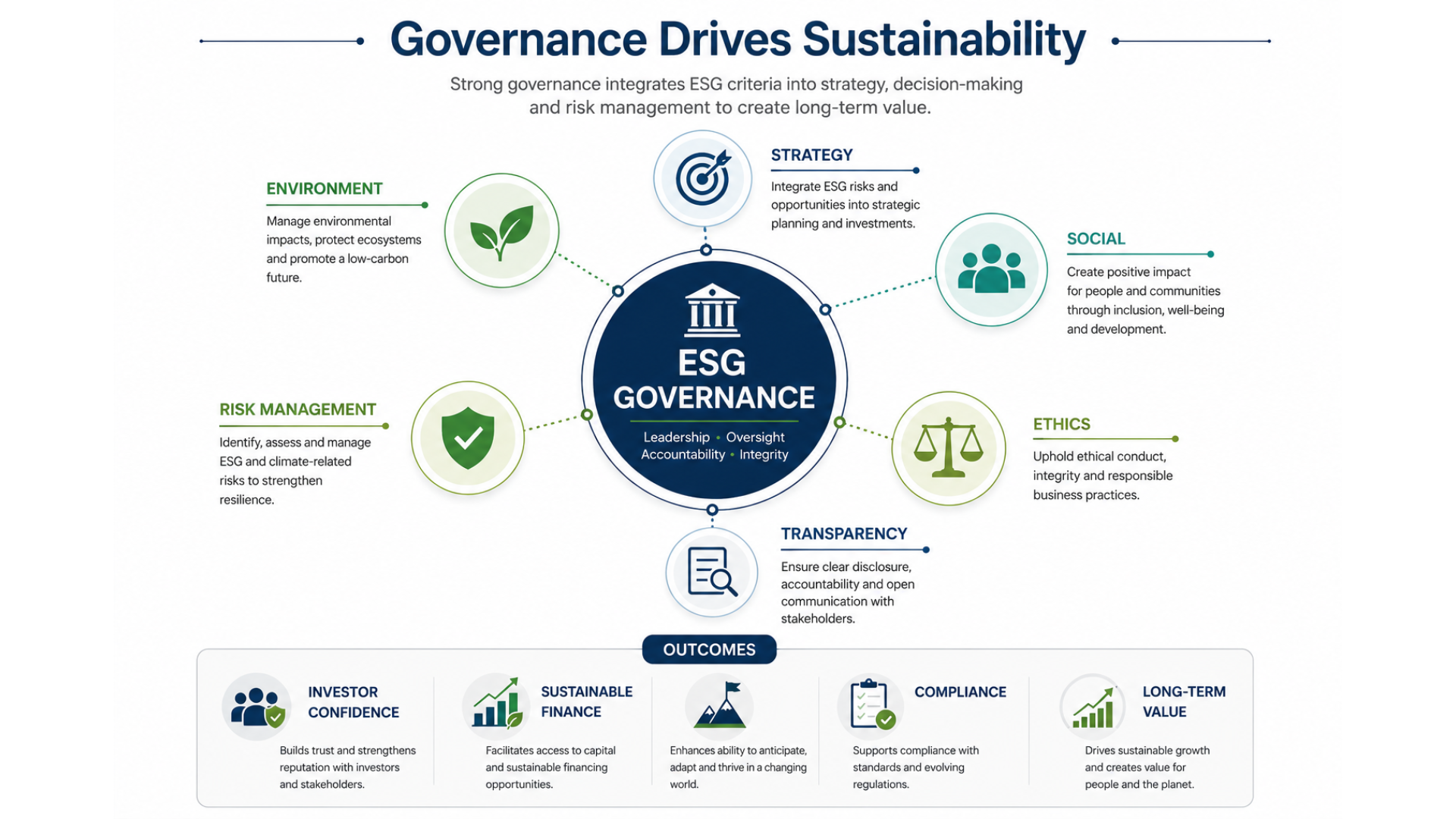
A robust governance framework provides the structures, processes and accountability mechanisms needed to translate sustainability commitments into concrete actions, measurable objectives and transparent reporting.
Why Integrate ESG into Corporate Governance?

Embedding ESG considerations into governance structures strengthens an organization’s ability to:
- Identify and manage environmental, social and climate-related risks.
- Enhance transparency and accountability to investors and other stakeholders.
- Build trust with customers, business partners and local communities.
- Improve access to sustainable finance and investment capital.
- Align with internationally recognized sustainability standards and reporting frameworks.
- Create long-term value while strengthening organizational resilience.
The Role of Governance in ESG and Climate Risk Management
Governance has evolved from being considered a corporate best practice to becoming a core component of leading international sustainability and disclosure frameworks. Today, regulators, investors and financial institutions increasingly expect organizations to establish governance structures capable of overseeing ESG- and climate-related risks and opportunities as an integral part of corporate strategy.
Climate change, the transition to low-carbon economies and increasingly stringent regulatory requirements are reshaping the global business landscape. Boards of directors and governing bodies are expected to oversee these emerging risks and opportunities, ensuring they are integrated into strategic planning, investment decisions and organizational oversight.

This evolution is reflected in international frameworks such as the IFRS Sustainability Disclosure Standards (IFRS S1 and IFRS S2) issued by the International Sustainability Standards Board (ISSB), which incorporate the recommendations of the Task Force on Climate-related Financial Disclosures (TCFD). It is also reinforced by globally recognized reporting standards such as GRI and SASB, which emphasize strong governance as the foundation for effective sustainability management and transparent ESG disclosure.
Governance aligned with ESG principles enables organizations to anticipate emerging risks, strengthen climate resilience, develop adaptation strategies and capitalize on opportunities associated with carbon markets, sustainable finance and the transition to a low-carbon economy.

Key Elements for Strengthening ESG Governance
Organizations can advance the integration of ESG considerations by:
- Clearly defining governance responsibilities for sustainability within boards and executive leadership.
- Integrating ESG-related risks and opportunities into strategic decision-making processes.
- Establishing policies, governance procedures and internal controls aligned with international best practices.
- Developing ESG performance indicators together with monitoring and reporting mechanisms.
- Promoting diversity, ethical conduct, integrity and institutional transparency.
- Strengthening internal capabilities through continuous training and capacity-building initiatives.

A Competitive Advantage for the Future
Organizations that integrate ESG principles into their governance frameworks do more than respond to investor expectations and evolving sustainability regulations. They also enhance their ability to generate long-term value, strengthen resilience and improve their competitive positioning in an increasingly sustainability-driven global economy.
At Allen Manza, we support organizations, investors and project developers in strengthening governance systems, integrating ESG principles, managing climate-related risks and accessing sustainable finance mechanisms. Our goal is to help build resilient organizations that are better prepared to address future challenges while creating lasting environmental, social and economic value.